


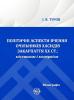
Політичні аспекти вчення очільників хасидів Закарпаття ХХ ст.: містицизм і модернізм
Автори
Ігор Туров
Інститут політичних і етнонаціональних досліджень ім. І.Ф. Кураса НАН України, Україна
Ключові слова:
хасидизм, ортодоксальний юдаїзм, Українське Закарпаття, політична думка, містицизм, модернізмКороткий опис
У монографії проаналізовано політичні аспекти вчення лідерів хасидів Закарпаття XX ст. та їх практичну реалізацію. Відповідна діяльність поєднувала традиційний політичний порядок денний, що сформувався у часи виникнення хасидизму, та специфічну реакцію на виклики новітнього часу очільників цього релігійного руху. Автор доводить, що деякі, на перший погляд, архаїчні концепції мають сучасний зміст, а інші, попри модерну форму, тяжіють до традиційності.
Дослідження виконано відповідно до гіпотези, що віровчення хасидизму є окремим джерелом політичної думки. Особлива увага приділяється поясненню того, яким чином розвиток політичної думки сприяв збереженню руху хасидизму в сучасному світі. Закарпаттю судилося стати одним із провідних осередків формування панівної дотепер ідеології ортодоксального юдаїзму. Для політологів, релігієзнавців, істориків та фахівців у царині юдаїки.
Посилання
Бібліографічні посилання
References
Балагулин, В. (2022, Февраль 8). Йоси Бейлин представит в ООН план создания "Израильско-палестинской конфедерации". STMGI. https://stmegi.com/posts/95990/yosi-beylin-predstavit-v-oon-plan-sozdaniya-izrailsko-palestinskoy-konfederatsii/
Белова, О., Петрухин, В. (2008). Еврейский миф в славянской культуре. Москва: Гешарим.
Вейнберг, М. (2003). Введение в Танах: Пророки. Москва: Гешарим.
Галант, І. (1929). До історії боротьби з цадикизмом (А.Кримський, Ред.). В Збірка праць єврейської історико-археографічної комісії (Т. 2, c. 313–344). Київ: Всеукраїнська Академія Наук.
Голдстоун, Д. (2006). К теории революции четвертого поколенияю. Логос, 5 (56), 58–103.
Елинек, Й. (2010). Карпатская диаспора: Евреи Подкарпатской Руси и Мукачева (1848–1948). (М. Егорченко, С. Гурбич и Э. Гринберг, Пер.).Ужгород: Издательство В. Падяка.
Єрмоленко, В. (2023) Плинні ідеології: Ідеї та політика в Європі XIX – XX століть. Київ: Дух і Літера.
Ізраїль вперше підтвердив ліквідацію лідера ХАМАС Ханії в Тегерані. ( 2024, 23 грудня).
РБК-Україна. https://www.rbc.ua/rus/news/izrayil-upershe-pidtverdiv-likvidatsiyu-lidera-1734987742.html
Мангайм, К. (2008). Ідеологія та утопія. Київ: Дух і Літера.
Рабкин, Я. (2009). Еврей против еврея: иудейское сопротивление сионизму. Москва: Текст.
Туров, И. (2007). Внешний и внутренний мир как пространство служения Создателю в вероучении раннего хасидизма. Східний Світ, 2, 117–122.
Туров, И. (2019). Учение основоположников хасидизма о власти цадика: Мистика и реалии мира сего. Киев: Друкарский двор Олега Федорова.
Туров, І. (2021). Вплив хасидів на вчення та громадську позицію р. Авраама Кука. Східний світ, 1,65–84. DOI: https://doi.org/10.15407/orientw2021.01.065
Туров, І. (2022). Взаємодія громади з цадиком у вченні р. Хаїма Елазара Шапіри. Східний Світ, 1, 114–133. DOI: https://doi.org/10.15407/orientw 2022.01.114
Туров, И. (2007). К вопросу об учении хасидов о миссии праведника (Проповеди р. Авраама Малаха из Фастова). Східний Світ, 1, 71–82.
Ультраортодокс из "Нетурей карта" шпионил в пользу Ирана. (2014, Январь 28). 9 канал (Израиль). https://archive.9tv.co.il/news/2014/01/28/167982.html
Умер основатель антисионистской иудейской общины "Нетурей карта". (2010, Май 4). Islam News. https://islamnews.ru/Umer-osnovatel-antisionistskoj-iudejskoj-obshhiny-quot-Neturej-karta-quot
Чарный, С. (2006, Декабрь 22). Ортодоксы против Израиля: Кто отрицает Холокост? Religare. https://religare.ru/3644210
Честертон, Г. (2003). Ортодоксия. Москва: Православный Свято-Тихоновский богословский Институт.
Шолем, Г. ( 2004). Основные течения в еврейской мистике. (Н. Бартман, Н. Э. Заболотная, Пер.). Ерусалим и Москва: Гешарим.
Albek, H. (Ed.). Bereshit Raba. (1996). Jerusalem:Shalem Books.
Alfasi, I. (1986). Tiferet she-be-Malhut. Haifa: Ohel Moshe.
Alfasi, I. (2000). Entsiklopediya le-Hasidut: Ishim (Vol. 2). Mosad ha-Rav Kook: Jerusalem.
Altmann, A. (1983). Panim shel Yahdut. Tel-Aviv: Hotsaat Am Oved.
Altshuler, M. (2002). Ha-Sod ha-mashiahy shel Hasidut. Haifa: Hotsaat sfarim shel Universitat Haifa.
Anti-Israel rabbis support Iran. (2006, March 12). Aljazeera. https://www.aljazeera.com/news/2006/3/12/anti-israel-rabbis-support-iran
Arendt, H. (1978). To Save the Jewish Homeland. In Hanna Arendt (Ed.), Jew as Pariah (pp. 184–189). New York: Grove Press.
Assaf, D., & Bartal, I. (1994). Shtadlanut ve-ortodoksiya: tsadikey polin be- mifgash im ha-zmanim ha-hadashim (R. Elior, I. Bartal, & H. Shmeruk, Ed.). Betoh Tsadikim ve-nshey maase (p. 65–90). Jerusalem: Mosad Bialik.
Assaf, D. (2001). Dereh ha-malhut: r. Israel mi-Rujin u-mkomo be-toldot ha-hasidut. Jerusalem: Mirkaz Zalman Shazar.
Avivi, J. (2008). Qabalat ha-Ari (Vol. 3). Jerusalem: Mahon ben-Tsvy.
Azulay, A. (1999). Hesed le-Avraham. Jerusalem:Mahon "Saarey ha-Tora".
Bartal, I. (Ed.). Pinkas vaad arba artsot (Vol. 1). (1990). Jerusalem: Mosad Bialik.
Beilin, Y. Confederation Is the Key to Mideast Peace. (2015, June 14). https://www.nytimes.com/2015/05/15/opinion/yossi-beilin-a-confederation-for-peace.html
Blau, A. (1974, January 17). A Call from Jerusalem. The Guardian, 2–3.
Blau, R. (1978). Les gardiens de la cite: histoire d`une guerre sainte.Paris: Flammarion.
Buber, Sh. (Ed.). Psikta de-rabby Kagana. (1983). Jerusalem: Hotsaat H. ve-Geshel.
Buber, M. (2001). Be-Pardes ha- Hasidut. Jerusalem: Mosad Bialik.
Cala, A. (1995). The Image of the Jew in polish folk culture. Jerusalem: Magnes.
Dan, J. (1997). Hasidism: The Third Century (A. Rapoport-Albert, Ed.). In Hasidism Reappraised (p. 415–426). London: Littman Library of Jewish Civilization.
De Michelis, C. (2004). The non-existent manuscript: a study of the Protocols of the sages of Zion. Lincoln: Univ. of Nebraska Press.
Dinur, B. (1972). Ha-pergamentim ha-historiosofiym be-sifrut ha-talmudit ubeayot ha-heker ba-hem. In Divrey ha-congress ha olami ha-hamishi be-madeyyahdut (p. 137–146). Jerusalem: The Hebrew University of Jerusalem.
Dinur, B. (1977). Reshita shel ha-hasidut vi-yesodoteyha ha-sotsialiym ve-hameshihiym (A. Rubinshteyn, Ed.). In Prakim be-Torat ha-Hasidut u-ve-toldoteha (p. 96–110). Jerusalem: Mirkaz Zalman Shazar.
Dov Ber Magid mi-Mezhirech. (1976). Magid dvarav le-Ykov. Jerusalem: Dfus Mirkaz.
Dov Ber mi-Mezhirecz. (2004). Magid dvarav le-Yaaqov. Brooklin, New York: Otsar ha-Hasidim.
Dresner, S. (1960). The Zaddik: An Inspired Study of the Mystical Spiritual Leader of Eighteenth-Century Hasidism. New York: Abelard-Schuman.
Dubnov, S. (1960). Toldot ha-hasidut. Tel Aviv: Dvir.
Elior, R. (1987). ḤaBad: The Contemplative Ascent to God (A. Green, Ed.). In Jewish Spirituality (Vol. 2). From the Sixteenth-Century Revival to the Present (p. 157–205). New York: Crossroad Publishing.
Elior, R. (1993). The paradoxical ascent to God: The Kabbalistic Theosophy of Habad Hasidism. New York: State University of New-York Press.
Elior, R. (1998). The Lubavitch messianic resurgence: the historical and mystical background 1939–1996. In M. Cohen (Ed.). Toward the Millenium: Messianic expectations from the Bible to Waco (pp. 383–408). Köln: Brill.
Etkes, I. (1998). Tnuat ha-Hasidut be-reshita. Tel-Aviv: Misrad ha-betahon Hotsaa le-Or.
Etkes, I. (1998). Yahid be-Ddoro: Ha-Gaon mi-Vilno-dmut ve-dimuy. Jerusalem: Mirkaz Zalman Shazar.
Etkes, I. (2000). Ha-Zadik: zikat gomlin beyn dfus hevrati le-mishna reayonit (I.Etkes, Ed.). In Be-Maagaley Hasidim (p. 287–297). Jerusalem: Mosad Bialik.
Etkes, I. (2001). Baal Shem. Ha-Besht – Magiya, Mistika, Gangaga. Jerusalem:Mirkaz Zalman Shazar le-toldot Israel.
Etkes, I. (2001). Ha-Gra ve-reshit ha-maabak be-hasidut (D. Assaf, Ed.). Betoh Tsadik ve-eda. Hebetim historiyim ve-hevratiyim be-heqer ha-hasidut (p. 273–296). Jerusalem: Mirkaz Zalman Shazar.
Ferberg, J. (2017, June 19). Alilat Dam be-tsaado shel neturey karta be-london. Be-Hadarey Haredim. https://www.bhol.co.il/news/808329
Ferziger, A. (2008). Roth, Aharon. The YIVO Encyclopedia of Jews in Eastern Europe. https://encyclopedia.yivo.org/article/1631
Fine, L. (1997). The Contamplative Practice of Yehudim in Lurianic Kabbalah. In A. Green (ed.), Jewish Spirituality (Vol. 2): From the Sixteenth-Century Revival to the Present (pp. 64–98). New-York: Crossroad Publishing.
Gad, S. (2009). Hasidut Chernobl: Toldot ve-Toroteha mi-reshita ve-ad erev milhemet olam ha-rishona. (Hibur le-shem kabalat toar doctor le-filosofiya). Universitat Tel-Aviv.
Gafni, I. (1996). Concepts of Periodisation and Causality in Talmudic Literature, Jewish History,10, 1, 21–38.
Garb, J. (2005). Hufaotav ha-koah be-mistika ha-ehudit. Jerusalem: Magnes.
Green, A. (1977). The Zaddiq as Axis Mundi in Later Judaism, JAAR, XLV, 3, 327–347.
Green, A. (1987). Typologies of Leadership and the Hasidic Zaddiq (A. Green, Ed.). In Jewish Spirituality (Vol. 2): From the Sixteenth-Century Revival to the Present (p. 127–156). New York: Crossroad Publishing.
Green, A. (1989). Devotion and Commandment: The faith of Abragam in the Hasidic Imagination. Cincinnati: Hebrew Union College Press.
Gruenwald, I. (1996). Maimonides’ Quest beyond Philosophy and Prophecy ( J. Kraemer, Ed.). In Perspectives on Maimonides (p. 141–157). Oxford Portland, Oregon: Littman Library of Jewish Civilization.
Guzmen-Carmelis, S. , & Sharabi, A. (2014). The holy contract: The social contract of the Toldos Aharon Hasidic group. Social Compass, 61(3), p. 290–309.
Hager, Y. (1938). Or Israel. Aradea: Dfus al yadey Fridmanen.
Hager, Y. (1985a). Ahavat Israel (Vol. 1). Jerusalem: s.n.
Hager, Y. (1985b). Ahavat Israel (Vol. 2). Jerusalem: s.n.
Hallamish, M. (2000). Ha-Qabbalah be-tfila be-hlakha u be-minhag. Ramat Gan:Hotsaat Universita Bar-Ilan.
Halamish, M. (2021). Tikun hatsot ve-gilgulav ad emtsa ha-mea ha-shva-esre (Avriel B., Oded I., Jonatan M., & A.Reiner, Ed.). In Dereh Sefer (p. 107–152). Jerusalem: Yad Itshak Ben-Tsvy.
Halfon, E. (1998). Milon Ivri-Kabali. Nof Ilon: Amutat Or Tsah.
Hershkowitz, I. (2009). Hazon ha-geula shel ha-rav Yissachar Shlomo Teichtal:Tmurot be-tfisato ha-meshihit be-mahalah ha-Shoa. PhD dissertation. Ramat-Gan:Universitat Bar-Ilan.
Hertzberg, A.(1997). The Zionist Idea: A Historical Analysis and Reader. Philadelphia: The Jewish Publication society.
Idel, M. (1992). Al toldot musag ha-zimzum be-qabbalah u-ve-mehkar. Mehkarey Erushalaim be- Mahshevet Israel,10, 59–113.
Idel, M. (1993). Kabalah: Hebetim Hadashim. Jerusalem & Tel-Aviv: Hatsaat Shoken.
Idel, M. (1995). Hasidism, Between Ecstasy and Magic. New York: State University of New York Press.
Idel, M. (1996). Golem: Masorot magiyot u mistiot be-yahdut al yetsirat adam mlakhuty. Jerusalem & Tel-Aviv: Schocken.
Idel, M. (1998). Messianic Mystics. New Haven & London: Yale University Press.
Idel, M. (1998). Some concepts of time and history in kabbalah (E. Carlebach, J. Efron, & D. Myers, Ed.). In Jewish history and Jewish memory (p. 153–188). Hanover and London: Brandeis University Press.
Inbary, M. (2013). Aktivizm meshihy be-peulo u-ve-haguto shel ha-rav Haim Elazar Shapira mi-munkatch beyn shtey milhamot ha-olam. Katedra, 149, 77–104.
Inbary, M. (2017). Mshihiut, tsionut ve-hasidut. Daat, 84, 301–324.
Jacobs, L. (1993). Hasidic Prayer. London: Littman Library of Jewish Civilization.
Jacobson, Y. (1985). Torata shel Hasidut. Tel Aviv: Misrad Ha-Bitakhon.
Kahana, D. (1998). Toldot Rabeynu. New York: Hotsaat Emet Or Torah Munkatsh.
Katz, S. (1975). Jewish Philosophers. Jerusalem: Keter Publishing House.
Katz, J. (1993). Tradition and Crisis: Jewish Society at the End of the Middle Ages. New York: Schoken Books.
Kraus, I. (2000). Yahadut ve-tsionut – shnaim she-lo ilhu yahdav: mishnato ha-radikalit shel r. Yoel Teytelbaum ha-admor mi – Satmar. Ha-Tsionut, 22, 37–60.
Kook, А. I. (1961). Igerot ha-reiyah (Vol. 3). Jerusalem: Mosad ha-rav Kook.
Kook, А. I. (1963). Orot ha-Kodesh (Vol. 1). Jerusalem: Mosad ha-rav Kook.
Kornbluh, J. (2025, November 2). Why some Satmar Hasidic leaders endorsed Zohran Mamdani as mayor, stunning many Jewish voters. Forward. https://forward.com/fast-forward/779920/satmar-mamdani-nyc-mayor-election-endorsement/
Koyfman, Ts. (2008). Be Kol darkeha dahu: Tfisat ha-elohut ve-ha-avoda be-geshmiut be-reiya ha-hasidut. Ramat Gan: Hotsaat Universita Bar Ilan.
Leshem, Ts. (2007). Beyn mshihiut le-nevua: ha-hasidut al py ha-admor mi-Pyasechna. (Hibur le-shem kabalat toar doctor le-filosofiya). Universitat Bar-Ilan.
Levy Itshak mi-Berdichev. (1876). Kdushat ha-Levy. Warszawa:Dfus R. Itshak Goldman.
Levy Itshak mi-Berdichev. (1978). Kdushat ha-Levy. New York, Brookline: n.s.
Liebes, Y. (1993). Studies in the Zohar. Albany: State University of New York Press.
Liebes, Y. (1994). Zohar va-Eros. Alpaim, 9, 67–117.
Liebes, Y. (1995). Sod ha-emuna ha-Shabtait. Jerusalem: Mosad Bialik.
Loewenthal, N. (1990). Communicating the Infinite: The Emergence of the Habad School. Chicago: The University of Chicago Press.
Loewenthal, N. (1997). Habad Approaches to Contemplative Prayer, 1790–1920 (A. Rapoport-Albert, Ed.) . In Hasidism Reappraised (p. 288–301). London: Littman Library of Jewish Civilization.
Lurie, I. (2006). Eda u-Medina: Hasidut habad ba-imperiya ha-rusit 1828–1882. Jerusalem: Magnes.
Margoshes, Y. (1936). Eraynerungen fun mayn leben. New York: POSY-SHOULSON press.
Mark, Ts. (2003). Mistika ve-shigaon be-ezirat r. Nahman mi-Braslav. Tel-Aviv: Am Oved Publishers Ltd.
Melker, D. (1931). Fun rabin’s hoyf. New York: The Jewish Book Publishing Company.
Mendelsohn, E. (1983). The Jews of East Central Europe Between the World Wars. Bloomington:Indiana University Press.
Meroz, R. (2018). Ha-Biografiya ha-ruhanit shel Rasby, diyun be-yasodot tekstualiim shel sefer ha-Zohar. Jerusalem: Mosad Byalik.
Meyer, M. (1988). Response to Modernity: A History of the Reform Movement in Judaism. Detroit: Wayne State University Press.
Myers, D (2013). "Commanded War": Three Chapters in the "Military" History of Satmar Hasidism, Journal of the American Academy of Religion, 81, 2, 311–356.
Ner Israel. (2002). Bney-Brak: Irgun Tseirey Vyzhnyts.
Menahem Nohum mi-Chernobyl. (1975). Maor Eynaim. Jerusalem: Eshivat "Maor Eynaim".
Nigal, G. (1999). Mehkarim be-hasidut (Vol. 1). Jerusalem: Ha-Mahon le-mehkar ha-sifrut ha-hasidit.
Ortner, N. (1972). R.Tsvi Elimeleh mi-Dinov (Vol. 1). Bney-Brak: Ha-Mahon le-ha-nitshat hasidut galitsiya.
Orthodox Jews In New York City Defend Zohran Mamdani At Anti-Zionism Protest Outside City Hall. (2025, October 31). Forbes Breaking News. https://www.youtube.com/watch?v=7NmGPStXWl0
Pachter, M. (1992). Le-Virur ha-musag "ktanut" ve-"gadlut" be-kabalat ha-Ari ke-reka le-havanatam be-mahshava ha-hasidit. Mehkarey Erushalaim be-Mahshevet Israel, 10, 171–211.
Piekarz, M. (1994). Beyn ideologiya le-meziut: Anava, Ayn Bituli mi-Meziut ve-Devekut be-mahshavtam shel roshey ha-Hasidut. Jerusalem: Mosad bialik.
Piekarz, M. (1999). Hanhaga Hasidit.Samhut ve-emunat zadikim be-aspaklariyat sifruta shel ha-hasidut. Jerusalem: Mosad Bialik.
Powell, M. (2006, April 26). Succession Unclear After Grand Rebbe`s Death. Washington Post. https://www.washingtonpost.com/archive/politics/2006/04/26/succession-unclear-after-grand-rebbes-death-span-classbankheadcourt-battle-over-control-of-hasidic-sect-continuesspan/b349e3a6-595b-4404-86f7-dc31c68022e3/
Rabinowitsch, Z. (1961). Ha-Hasidut ha-litait. Jerusalem: Mosad Bialik.
Rapoport-Albert, A. (1979). God and the Zaddik as the Two Focal Points of Hasidic Worship. History and religion, 18(4), 296–325.
Rapoport-Albert, A. (1991). God and the Zaddik as the Two Focal Points of Hasidic Worship (G. D. Hundert, Ed.). In Essential Papers on Hasidism (p. 296–325). New York: New York University Press.
Rapoport-Albert, A. (1997). Hasidism after 1772: Structural Continuity and Change (A. Rapoport-Albert, Ed.). In Hasidism Reappraised (p. 76–140). London: Littman Library of Jewis h Civilization.
Ravitzky, A. (1996). Messianism, Zionism, and Jewish religious Radicalism. Chicago & London: The University of Chicago Press.
Ravitzky, A. (1998). Munkacs and Jerusalem: Ultra-Orthodox opposition to Zionism and Agudaism (S. Almong, J. Reinharz, & A. Shapira, Ed.). In Zionism and Religion
(p. 67–92). Hanover&London: Brandeis University Press.
Reiser, D. (2016). Hebetim be-haguto shel ha-rav Yissachar Shlomo Teichtal ve-iunim ba-mismahim hadasim (D. Reiser, Ed.). Betoh Yad Vashem-Kovets mehkarim (p. 119–156). Jerusalem: Yad Vashem.
Rehtman, A. (1958). Yidishe etnografiya un folklor. Buenos Ayres:Yivo.
Rodensky, P. (2008). Hasidism in the Age of Reform: A Biography of Rabbi Duvid Ben Mordkhe Twersky of Tal’noye. (Thesis for the Degree of Doctor of Philosophy in Jewish History). The Graduate School of The Jewish Theological Seminary of America.
Rodensky, P. (2008). Hasidism in the Age of Reform: A Biography of Rabbi Duvid Ben Mordkhe Twersky of Tal’noye. (Thesis for the Degree of Doctor of Philosophy in Jewish History). The Graduate School of The Jewish Theological Seminary of America.
Ronan, I. (2003). Peilut neturey karta neged hakamat ha-medina. Kivunim hadashim, 9, 158–174.
Roth, A. (1959a). Shomer Emunim (Vol. 1). Jerusalem: s.n.
Roth, A. (1959b). Shomer Emunim (Vol. 2). Jerusalem: s.n.
Rozman, S. (1991). Shfar harery kedem: Gulat karpatorus be-tiferta u-ve-hurbana. New York: Zichron Kedoshim.
Sack, B. (1995). Be-Shaarey ha-qabbalah shel r. Moshe Qordovero. Jerusalem: Hotsaat ha-sfarim shel universita Ben Gurion be-Negev.
Sack, B. (1997). The Influence of Reshit hokhmah on the Teachings of the Maggid of Mezhirech. In A. rapoport-Albert (Ed.), Hassidism Reappraised (pp. 251–257). London: Littman Library of Jewish Civilization.
Salmon, Y. (2008). Zionism and Anti-Zionizm in Traditional Judaism in Eastern Europ
(S. Almong, J. Reinharz, & A. Shapira, Eds.). In Zionism and Religion Zionism and Religion (p. 25–43). Hanover&London: Brandeis University Press.
Schachter-Shalomi, Z, Goelman, Y. (2009). AHRON’S HEART. Teaneck, New Jersey: Ben Yehuda Press.
Schatz-Uffenheimer, R. (1980). Ha-hasidut ke-mistika. Jerusalem: Magnes.
Scholem, G. (1971). The Messianic Idea in Judaism. New York: SCHOCKEN BOOKS.
Scholem, G. (1976). Pirkey yasod be-havanat ha-qabalah ve-smaleha. Jerusalem: Mosad Byalik.
Shapira, H. (1935). Tikun olam. Munkatsh: Druc H. Guttmann.
Shapira, H. (1936). Adon kol. Munkatsh: s.n.
Shapira, H. (1962). Maamar zikaron tsadiqim. Jerusalem: Ch. Mashkovich.
Shapira, H. (1991). Sefer mashmia yeshua. New York: Hotsaat Emet Or Torah Munkatsh.
Shapira, H. (1996). Minhat Elazar (Vol. 1). Jerusalem: Hotsaat Emet Or Torah Munkatsh.
Shapira, H. (1998). Divrey Tora (Vol. 1). Jerusalem: Hotsaat Emet Or Torah Munkatsh.
Shapira, Ts. (1964). Beer le-hay rei. Jerusalem: s.n.
Shapira, Ts. (1999a). Tiferet banim (Vol. 1). Jerusalem: Emes Publishing.
Shapira, Ts. (1999b), Tiferet banim (Vol. 2). Jerusalem: Emes Publishing.
Shpigel, Y. (1997). Toldot ha-Ehudim be-Rusiya ha-Karpatit. Tel-Aviv: s.n.
Shneur Zalman mi-Lyady. (2005). Liqutey amarim: Tanya. New York, Bruklin: Otsar ha Hasidim.
Silber, M. (1992). The Emergence of Ultra-Orthodoxy: The Invention of a Tradition (J. Wertheimer, Ed.). In The Uses of Tradition Jewish Continuity in the Modern Era
(p. 23–84). New York and Jerusalem: The Jewish Theological Seminary of America.
Rubenshteyn, A. (Ed). Sefer Shivhey ha-Besht. (1991). Jerusalem: Reuven Mas.
Minz, B. (Ed). Sefer Shivhey ha-Besht. (1961). Tel-Aviv: Dvir.
Shapira, H. (1962). Maamar zikaron tsadiqim. Jerusalem: Ch. Mashkovich.
Shapira, Ts. (1999). Tiferet banim (Vol. 1). Jerusalem: Emes Publishing.
Shohet, A. (1979). Ha-zadik be-torat ha-hasidut. In Sefer Yaakov Gil (pp. 299–306). Jerusalem: R’ MS.
Shpigel, Y. (1997). Toldot ha-Ehudim be-Rusiya ha-Karpatit. Tel-Aviv: s.n.
Shvarts, D. (1999). Astrologiya u-Magiya be-hagut ha-ehudit bi-mey ha-beynaim. Ramat – Gan: Hotsaat Universita Bar-Ilan.
Teichtal, Y. Sh. (2013). Em ha-Banim Simha. Jerusalem: Mishpahat ha-mehaber be-siyua Keren Ram.
Teitelbaum, J. (1967). Al ha-Geulah ve-al ha-thmurah. New-York: Jerusalem Publishing.
Teitelbaum, J. (1983). Sheelot ve tshuvot: Divrey Joel (Vol. 2). Ashdod: OTZROT HATORAH.
Teitelbaum, J. ( 2006). Va-Yoel Moshe. Bruklin: Hotsaat sfarim Erushalaim.
Tishby, I. & Dan, J. (1965). Torat ha-hasidut ve-sifruta. in Hebrew Encyclopaedia (J. Klausner, ed). (Vol. 17). 770–822.
Tishby, I. (1971a). Mishnat ha-zohar (Vol. 1). Jerusalem: Mosad Bialik.
Tishby, I. (1971b). Mishnat ha-zohar (Vol. 2). Jerusalem: Mosad Bialik.
Tishby, I. (1984). Torat ha-ra ve-ha-klipa be-qabbalat ha-Ary. Jerusalem: Magnes.
Tsvi Elimeleh mi-Dinov. (1975). Bney Issahar. New York: s.n.
Tsvi Elimeleh mi-Dinov. (1983). Bney Issahar (Vol. 1). Jerusalem: s.n.
Urbach, E. (1976). Halakhah and History. In R. Hamerton-Kelly & R. Scroggs (Eds.). Jews, Greeks and Christians: Essay in Honor of W. D. Davies (pp. 112–128). Leiden: Bril.
Urbach, E. (1986). Haza”l: Emunot ve-deot. Jerusalem: Magnes Press.
Waks, R. (2006). Ehud be-dibur ezel ha-Besht u-mamshikhey darko, Daat, 57–59, 143–164.
Weiss, J. (1974). Mehkarim ha-hasidut Braslav. Jerusalem: Mosad Bialik.
Weiss, J. (1997). A Studies in Eastern European Jewish Mysticism. Oxford: Oxford University Press.
Werblowsky, R. (1956). Some Psychological aspects of Kabbalah. Harvest, 3, 1–20.
Werblovskiy, Ts. (1996). R. Yosef Karo: Baal Galaha u-Mekubal. Jerusalem: Magnes.
We're not celebrating Israel's anniversary. (2008, April 30). The Guardian. https://www.theguardian.com/world/2008/apr/30/israelandthepalestinians
Wilensky, M. (1970a). Hasidim u-mitnagdim (Vol. 1). Jerusalem: Mnocad Byalik.
Wilensky, M. (1970b). Hasidim u-mitnagdim (Vol. 2). Jerusalem: Mnocad Byalik.
Wodziński, M.(2018). Historical Atlas of Hasidism. Princeton University Press.
Wolfson, E. (1997). Walking as a Sacred Duty: Theological Transformation of Social Reality. In Early Hasidism (A. Rapoport-Albert, Ed.). In Hasidism Reappraised (p. 187–191). London: Littman Library of Jewis h Civilization.
Wortheym, A. (1960). Halakhot ve-halikhot be-hasidut. Jerusalem: Mosad ha-Rav Kuk.
##submission.downloads##
Опубліковано
лютого 1, 2026
Авторське право (c) 2026 Наукові видання Інституту політичних і етнонаціональних досліджень ім. І. Ф. Кураса НАН України
Деталі про цю монографію
Co-publisher's ISBN-13 (24)
ISBN 978-617-14-0513-4
Date of first publication (11)
2026